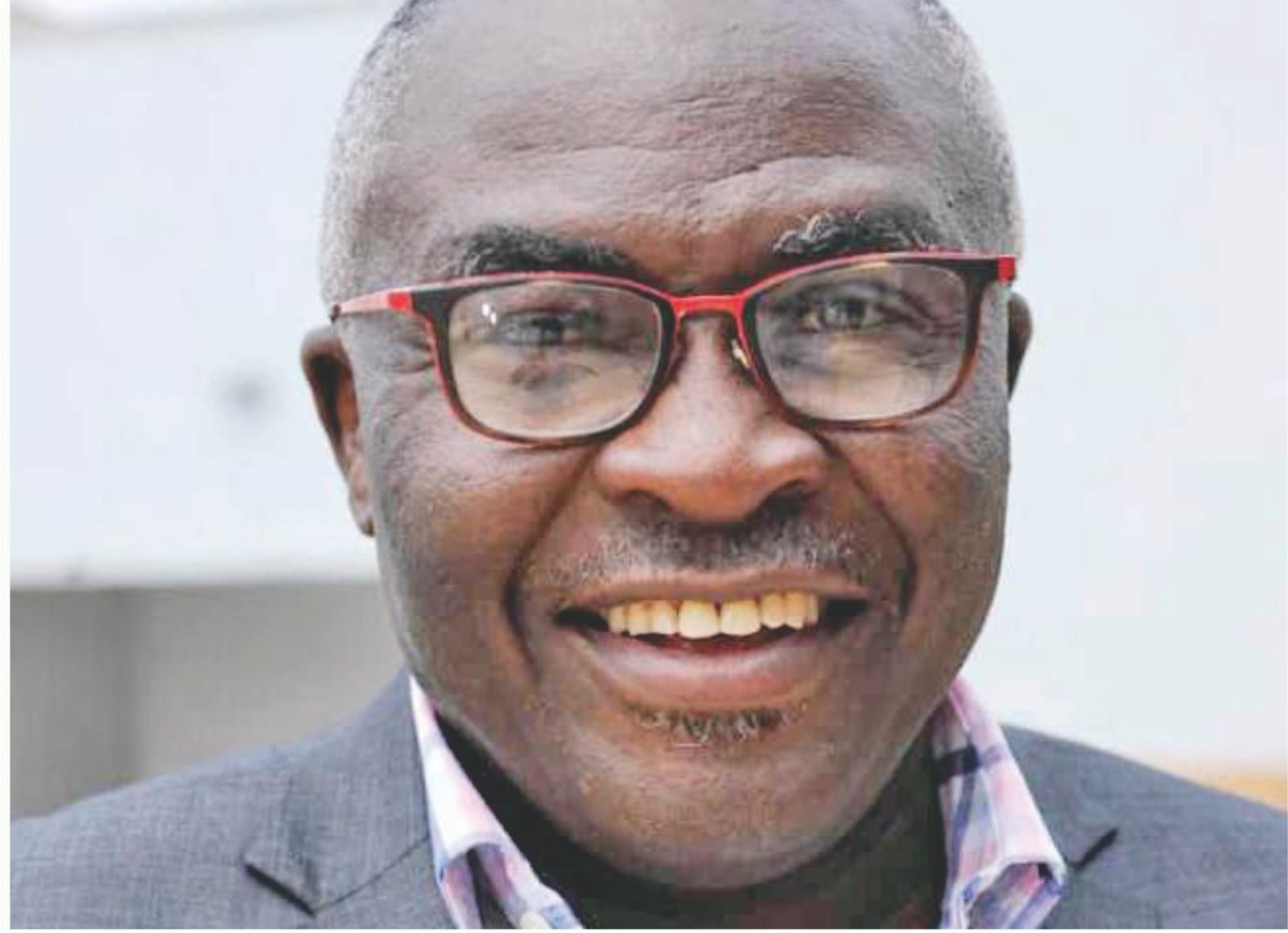
Emmanuel Ajufo’s Life of Reinvention: From Billboard Erection to the Bar
For more than three decades, Emmanuel Ajufo has built a career at the intersection of advertising, entrepreneurship and law. From transforming outdoor advertising to confronting regulatory barriers and championing industry professionalism, the Managing Director of Opportunity-To-See and Tenax Legal Services has consistently challenged convention. Now, he is thinking beyond success to legacy, writes Adedayo Adejobi
At the end of a long professional journey, Emmanuel Ajufo is less interested in talking about what he has accumulated than what he has changed. The companies are there. The billboards are there. The professional titles and awards have their place. There is the advertising career that began in 1990, the entrepreneurial leap that followed, the years spent helping to steer the Outdoor advertising industry, and, later, the decision to enter the legal profession.
Yet, the thread running through all of it is not ambition in its conventional sense. It is an instinct for order, a willingness to question what appears settled, and an almost stubborn refusal to watch something being done wrongly without saying something.
“I can’t be in a place and things, no matter how small, are being done wrongly and not talk about it,” he says.
“I can’t tolerate bad behaviour at all.”
It is perhaps the most revealing sentence in an interview that repeatedly returns to the same idea. Ajufo has spent much of his working life moving from practitioner to institution builder, and from participant to challenger of the system.
The journey began rather modestly. “When I got my first job,” he recalls, “I just wanted a job.”
There was no grand career blueprint. In 1990, the immediate objective was employment. The first opportunity came at Klinsite Outdoor Limited, now Optimum Exposures. But something happened after the job began. The work grew on him. What started as employment became a profession, and the profession became a defining part of his life.
More than three decades later, Ajufo can look back on a career that has tracked the transformation of Nigeria’s Outdoor advertising industry itself.
When he entered the business, the landscape was rudimentary. “When we started, it was only wooden billboards and starch,” he recalls. There were fewer options for clients, but there was also a culture of self-regulation that, in his telling, demanded a certain discipline. Companies behaved themselves.
Clients paid on time, sometimes even in advance. There was a fear of the monitoring community that he remembers with characteristic humour: “The fear of the Monitoring Community was the beginning of wisdom.” The industry changed. Options multiplied. Regulation became more complex. State signage agencies emerged, and Ajufo believes that the development came at a cost to the industry’s culture of self-regulation.
It was against this changing backdrop that he eventually made one of the most consequential decisions of his career. In 2008, he left established employment and founded OpportunityTo- See. He had worked for some of the country’s leading Outdoor advertising firms, and he understood both their strengths and their limitations. The businesses, he says, remained essentially one person’s businesses. Had he been offered a profit-sharing arrangement by the last two firms he worked for, he believes he might never have left. But there was another reason. “I saw the small gap in service delivery,” he says.
The response was straightforward in principle, although demanding in execution: improve the quality of service. That decision captures something fundamental about Ajufo’s approach to business. He does not describe entrepreneurship as a dramatic act of rebellion. Rather, it appears to have emerged from an impatience with what could be better. That same instinct would later take him into the heart of the industry’s regulatory battles.
For years, Ajufo occupied the unusual position of being both an operator within a heavily regulated industry and a leader of the professional association representing its interests. That meant navigating the uncomfortable space between business, regulation and professional responsibility.
He became increasingly convinced that the industry’s fear of regulatory retaliation was preventing it from standing up for itself. There was a particular fear among operators that confronting government could mean losing site approvals. For some industry leaders, accepting an unfavourable regulatory decision was therefore seen as the safer option. Ajufo reached a different conclusion. Before becoming President of the association, he had decided that the industry needed to change its attitude towards regulatory authorities. His answer was confrontation, not for confrontation’s sake, but as a means of forcing institutional progress.
“We will be the sacrificial lamb for the Association,” he says of the position he took. The consequences were real. His own businesses felt the impact. But the confrontation also helped galvanise the industry to approach regulatory issues collectively. His philosophy is distilled in one line: “If you don’t challenge the wrongs, you will suffer.”
There is no guarantee in that philosophy. Challenge and lose, he acknowledges, and there may still be consequences. But challenge and win, and the entire industry benefits. Today, he says, there are two pending legal cases against the Lagos State Government. The battles that once belonged primarily to an industry operator have now acquired another dimension because Ajufo is also a lawyer. The transition into law was itself unexpected. He insists that becoming a lawyer was never a childhood dream.
It was, instead, the product of healthy competition among peers. While living in Akure, Ondo State, he had a friend who studied law part time. The friend later became a member of APCON, giving him both professional standing and a legal qualification. Ajufo wanted to equal the feat. His friend died before Ajufo was called to the Bar. Today, he describes the legal profession with the same intensity that characterised his advertising career. He entered it after decades in another profession, bringing with him a deep understanding of the industry he would increasingly represent from an informed legal perspective. “The greatest beneficiary of my new profession is our Association,” he says.
Law changed the way he thinks. It made him more conscious of the consequences of decisions and more deliberate in dealing with regulatory issues. It also gave him another instrument with which to challenge a system he believes sometimes benefits from the ignorance of those it regulates. “People get away with a lot when the other party is ignorant,” he says. There is, however, a danger in turning Ajufo into a flawless corporate warrior. He is not one.
He knows that some people have considered him difficult. Others have called him troublesome. He understands why. He believes in order. Plans should be followed. If plans have to change, those affected should be carried along. Punctuality should not require persuasion. Laws should be respected. The same rigidity that can make an institutional reformer effective can make him difficult company. But he sees himself differently: easy going, compassionate, dependable, consistent and loyal to those who have earned his loyalty.
The contrast is part of what makes him interesting. The man who will challenge a regulator can also speak warmly about family. He describes himself as a dependable and loving father, husband and sibling, and credits his wife with helping build the home while his professional responsibilities expanded.
Earlier in the marriage, he spent more time at home. As the demands of work increased, that changed. The arrangement worked because, from the beginning, he and his wife had agreed on their respective responsibilities. He calls her a “wonderful house builder”. And while nobody in the industry may easily tell him no, there is one person who can. “At home, the real head of the home, my wife.” The humour matters because it reveals a man who is not entirely consumed by professional seriousness.
Asked what he misses about youth, his answer is telling: “Limited responsibility. Plenty energy to explore.” Asked what he wishes he had started earlier, he answers simply: “Marriage.” And what has he stopped worrying about? “Impressing people.” That may explain why his definition of success is not particularly material. “Fulfilment,” he says. Indeed, when asked whether he considers himself successful, he pauses over the distinction between success and contentment. “I want to believe that I am contented.”
There have been mistakes. The most expensive came from accepting an employment opportunity without doing sufficient due diligence. He left his previous employer and discovered that the new opportunity was not what he had imagined. The consequences were severe until another employer came to his rescue. The lesson has stayed with him: all that glitters is not gold, and important decisions deserve careful thought. It is a lesson that seems to have informed the entrepreneur, the association leader and the lawyer.
There have also been things he has refused to do. Some business opportunities, he believes, never materialised because prospective partners knew that his organisation would not compromise its principles. He does not regret that. “We have no regrets because at the end of the day, we are still here.”
That final phrase perhaps captures his professional philosophy better than any title could. ‘Still here. Still building. Still challenging.’ But increasingly, the question is what comes next. At this stage of his life, two things keep Ajufo awake. The first is professional recognition for the Outdoor advertising industry. He believes the industry is ready for professional status and that the wider advertising ecosystem would benefit from it. The second is much more personal: building Tenax Legal Services, his young law firm into an organisation capable of delivering quality service to its clients.
Money does not appear on the list. “I have never worried about making money. I won’t start now.” The priorities have shifted from accumulation to institution building. That is also where his idea of legacy begins. Ajufo is proud of the people he has mentored. Some of them, with a mixture of affection and respect, call him the “King of Boys”. But the nickname is not the legacy he wants. His real legacy, he says, will be the change brought to the industry. Professional status, if achieved, would be the icing on the cake. For his children and family, the measure is different. Their lives, and what they have become, are the evidence.
For the younger professionals he has mentored, he hopes the story will be of a man who fought selfishness and helped secure professional status for the industry. There is something fitting about that distinction. Ajufo’s career began with a man simply looking for a job. It evolved into a profession, then entrepreneurship, leadership, regulatory advocacy and law. At every stage, the role changed, but the instinct remained remarkably consistent.